

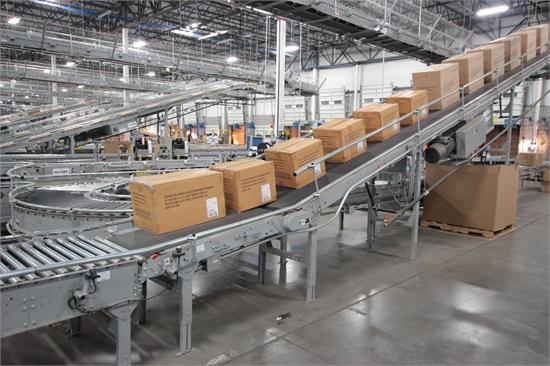
Conveyor systems are an integral part of many warehouse systems, helping your employees move products efficiently from one area to another. However, not all conveyor systems are made equal, and not every type will work for every facility. Warehouses vary widely in size, layout, the products they handle, and their workflows. Choosing the right conveyor system requires understanding the strengths and limitations of the different options and deciding which one aligns with your needs.
Belt Conveyors: Versatile and Reliable
Belt conveyors are probably the most common systems used in warehouses. They have a continuous belt stretched across rollers that moves products along a set path. One of the biggest advantages of belt conveyors is their versatility. They can move items of many different sizes and shapes, from small packages and cartons to irregularly shaped products. Belt systems are also relatively gentle on products, making them a good option for fragile goods.
However, belt conveyors do have drawbacks. They can require regular maintenance to keep the belt properly aligned and maintain proper tension. Additionally, they’re usually designed for fixed routes, which can make them hard to adjust if your warehouse layout changes.
Roller Conveyors: For Cartons and Pallets
Roller conveyors use a large number of cylindrical rollers to move items. These systems can be either gravity-powered or motorized, depending on the setup. Gravity roller conveyors are particularly popular because they’re cost-effective and don’t need a lot of maintenance. They work best when products can move downhill naturally, which makes them useful for loading things at docks or sorting areas. On the downside, roller conveyors are usually best for items with flat bottoms, like boxes or pallets. Irregularly shaped or soft-bottomed products may not move easily across the rollers.
Chain Conveyors: For Heavy Loads
Chain conveyors are designed to move heavy or bulky items like pallets, large containers, automotive components, or industrial equipment. They use chains to pull products along a track, making them extremely durable and capable of handling significant weight. Their strength is their main advantage, making them a great choice for warehouses that deal with heavy materials or fully loaded pallets of products. However, they tend to be louder and more expensive than other conveyor types. They may also be unnecessary for facilities that primarily handle lightweight packages, so only look at chain conveyors if you’re regularly moving very large loads.
Choosing the Right Conveyor System
Ultimately, there is no single conveyor system that fits every warehouse. The most effective option is usually a customized setup that combines different conveyor types to support your facility’s workflow and maximize your efficiency. To get professional assistance in finding the right system for your needs, be sure to work with a material handling supplier.
